El islamofascismo y sus delincuentes vuelven a ensangrentar Europa. ¡Vive la France!
divendres, 15 de juliol del 2016

Giovanni Sartori: "Si damos el voto a los inmigrantes impondrán la 'sharía' en Europa"

SARTORI.- Estamos en guerra. Cuando se llevan a cabo asesinatos en masa como los de París o Bruselas, significa que estamos en guerra. Y en tiempos de guerra no se pueden respetar las reglas de la paz porque si lo haces, pierdes la guerra. Estamos ante gente que nos ha declarado la guerra. Si matan a tus ciudadanos, si se cometen atentados y masacres, los Estados pueden e incluso deben aplicar el Derecho de Guerra. A la guerra hay que responder con las reglas de la guerra. Y eso significa que las aguas territoriales deben dejar de respetarse, y que todas las pateras y barcazas que esperan en el norte de África y en otras zonas costeras para partir rumbo a Europa y lucrarse con el tráfico de personas pueden y deben ser ametralladas, hundidas, antes de echarse a la mar, sin matar por supuesto a ninguna de esa pobre gente. Los terroristas fundamentalistas islámicos se financian con el tráfico de seres humanos, y debemos cerrarles ese grifo. Es una forma amigable de hacer la guerra, porque nosotros somos amigables.Entrevista completa, aquí
EL MUNDO.- ¿Apoya entonces la intervención militar?
Sí, absolutamente.
¿También por tierra?
No, una intervención por tierra sería una derrota. Yo estoy a favor solamente de una intervención aérea y con drones. Los drones son muy efectivos a la hora de golpear objetivos estratégicos y garantizan que no haya muertos entre la población civil. El riesgo existe siempre, es verdad, pero con los drones se minimiza. Con los drones conseguiríamos la destrucción de los objetivos militares y de las pateras que sirven para financiar a los terroristas sin tocar a la población civil.
¿Cree entonces que los gobernantes europeos están pecando de buenismo, de blandos?
Son unos dementes. A lo que se dedican es a multiplicar los entes inútiles. He tratado de contabilizar cuántos de esos entes inútiles hay exactamente, pero son tantos que no he podido.
Y si se vuelan por los aires las pateras, ¿qué hacemos con los refugiados, con toda esa marea de gente que huye de guerras o simplemente de la pobreza?
Volar las pateras tiene como objetivo principal evitar el tráfico de carne humana y la financiación del terrorismo fundamentalista islámico. ¿Qué hacemos con los refugiados? El problema en mi opinión es que no tenemos dónde meterlos... A este ritmo, en unos 30 años, según calculan algunos estudios, los musulmanes serán la mayoría en Italia. Creo que lo que habría que hacer es abrir en los países de origen procedimientos que permitan a todas esas personas hacer la solicitud de refugiado correspondiente, lo que permitiría también que los que vengan a Europa lo hagan con la perspectiva de un trabajo. A esa gente se le daría la residencia permanente, transmisible a sus hijos. Pero no el derecho al voto.
¿Y por qué no el voto?
Porque, si se les da el derecho al voto, en 40 años en Italia y muchos países europeos podría gobernar un partido musulmán que implantase la sharía, el Estado islámico.
dijous, 14 de juliol del 2016
No es verdad que vaya a subir el Impuesto de Sociedades

DANIEL LACALLE.- Se ha generado una enorme polémica con las declaraciones del ministro De Guindos sobre el impuesto de Sociedades. Ante una posible “multa cero” de Bruselas por incumplir el objetivo de déficit, se ha planteado un adelanto en el pago del Impuesto de Sociedades y posiblemente recuperar el fraccionamiento del mismo.Más...
Conviene recordar que:
– Adelantar pagos no es subir impuestos
– Fraccionar no es subir impuestos.
Se trataría de recuperar una disposición aplicada en el 2013 y prorrogada en 2014 y 2015 por la cual las grandes empresas hacen pagos fraccionados calculados sobre su resultado contable, no sobre la base sujeta al impuesto. Es una forma de tributar por Sociedades típica en la Unión Europea y no significa subir impuestos.
Eso no hace que paguen más, sino que la recaudación sea más homogénea, y el tipo efectivo final no cambia. Piensen que mucha gente se ha llevado las manos a la cabeza porque los ingresos fiscales habían caído en el primer trimestre sin reparar en que el Impuesto de Sociedades arrojaba una cifra negativa (que se compensa a lo largo del año), por devoluciones y ajustes. Ese efecto, se homogeneiza fraccionando.
Y fraccionar y adelantar no es una subida, ni hunde a una pyme. Aplica sobre todo a las grandes empresas (el 100% del aumento de la recaudación por sociedades desde 2011) que están más que acostumbradas a hacer provisiones de gasto anual en sus resultados trimestrales y mensuales.
Donald Trump tiene razón sobre la Juez del Tribunal Supremo, Ruth Bader Ginsburg

En dos artículos editoriales, The New York Times y The Washington Post lamentan las críticas lanzadas contra Donald Trump por la juez del Tribunal Supremo de los Estados Unidos, Ruth Bader Ginsburg. Los editorialistas coinciden en que si bien no existe ningún requisito legal que obligue a los magistrados del más alto tribunal a abstenerse de hacer comentarios sobre una campaña presidencial la tradición de guardar silencio se ha revelado como la más conveniente, como se ha demostrado con las críticas de la magistrada Ruth Bader.
Esos comentarios han llevado a Donald Trump a pedir la dimisión o renuncia de la magistrada, que no se a retractado de sus comentarios.
Justice Ruth Bader Ginsburg needs to drop the political punditry and the name-calling.Más...
Three times in the past week, Justice Ginsburg has publicly discussed her view of the presidential race, in the sharpest terms. In an interview with The Times published Sunday, Justice Ginsburg said, “I can’t imagine what the country would be — with Donald Trump as our president,” joking that if her husband were alive, he might have said, “It’s time for us to move to New Zealand.”
Earlier, in an interview with The Associated Press that appeared on Friday, when asked to consider a Trump victory, Justice Ginsburg replied, “I don’t want to think about that possibility, but if it should be, then everything is up for grabs.”
On Monday Justice Ginsburg doubled down, calling Mr. Trump “a faker,” who “has no consistency about him.” In that interview, with CNN, she added: “He says whatever comes into his head at the moment. He really has an ego.”
Mr. Trump responded on Tuesday. “I think it’s highly inappropriate that a United States Supreme Court judge gets involved in a political campaign, frankly,” he told The Times. “I couldn’t believe it when I saw it.”
There is no legal requirement that Supreme Court justices refrain from commenting on a presidential campaign. But Justice Ginsburg’s comments show why their tradition has been to keep silent.
NOTHING SUPREME Court Justice Ruth Bader Ginsburg has said in recent interviews about the presidential election should surprise anyone familiar with her biography and her career on the court. A lifelong left-of-center lawyer and feminist innovator who was appointed to the high court by President Bill Clinton in 1993, the 83-year-old Justice Ginsburg fits the profile of a Hillary Clinton supporter to a T. Obviously, she would rather have a Democrat appointing her next new colleague, and possibly her replacement.Más...
Nor were any of Justice Ginsburg’s disparaging comments about the presumptive Republican nominee, Donald Trump, untrue, at least not as we read the evidence. When Justice Ginsburg, elaborating on her previous anti-Trump remarks to the New York Times, told CNN this week that Mr. Trump “has no consistency about him. He says whatever comes into his head at the moment. He really has an ego,” she certainly got no argument from us on the merits. (A brief dissent from the justice on one point, though: She rightly protested that Mr. Trump has not released his tax returns but incorrectly chided “the press” for being “very gentle with him on that.”)
However valid her comments may have been, though, and however in keeping with her known political bent, they were still much, much better left unsaid by a member of the Supreme Court. There’s a good reason the Code of Conduct for United States Judges flatly states that a “judge should not . . . publicly endorse or oppose a candidate for public office.” Politicization, real or perceived, undermines public faith in the impartiality of the courts. No doubt this restriction requires judges, and justices, to muzzle themselves and, to a certain extent, to pretend they either do or do not think various things that they obviously do or do not believe. As the saying goes, however, “hypocrisy is the compliment vice pays to virtue.”
Giro copernicano en la política exterior turca
Tras normalizar relaciones con Rusia e Israel, Turquía quiere hacer las paces con Assad

FOREIGN POLICY.- In the past month, Turkey has worked to turn two old rivals into new friends. On June 27, Turkish officials announced a deal normalizing relations with Israel after a six-year rift in the wake of the deadly Mavi Marmara incident. That day, Turkish President Recep Tayyip Erdogan also expressed regret to Russia over the downing of a Russian warplane in November 2015, which paved the way for the two countries to patch up their relationship.Más...
The fate of Syria looms large over Turkey’s foreign-policy “reset.” Could Ankara alsoextend an olive branch to its greatest enemy: Syrian President Bashar al-Assad’s regime?Could Ankara also extend an olive branch to its greatest enemy: Syrian President Bashar al-Assad’s regime?
Turkey cut all diplomatic ties with Syria in September 2011, after Assad refused to institute reforms to defuse the growing protest movement against his rule. Since then, Turkey has been supporting the Syrian opposition, which aims to topple the Assad regime, and hosting more than 2.5 million Syrian refugees on its soil. A small, left-wing nationalist political party now claims that the rising refugee crisis, Russia’s heavy-handed military campaign in Syria, and a powerful Syrian Kurdish militia’s land grab in the northern part of the country leave Turkey no choice but to engage with the Assad regime. In fact, the leaders of that party already claim to be passing messages between Turkish and Syrian government officials.
The Homeland Party (Vatan Partisi), a nationalist movement with an anti-Western and anti-American platform, is chaired by Dogu Perincek, a well-known socialist politician in Turkey; its vice chair is Lt. Gen. Ismail Hakki Pekin, the former head of the Turkish Armed Forces’ Military Intelligence. Perincek and Pekin told Foreign Policy that they had meetings with members of the governments of Russia, China, Iran, and Syria during the last year and conveyed messages they received during these visits to high-ranking Turkish military and Foreign Ministry officials.
Perincek and Pekin — a socialist leader and an army general, respectively — may seem like something of an odd couple. Their political collaboration started in prison, as both men were detained in 2011 in relation to the Ergenekon case, which alleged that a network belonging to the “deep state” was plotting a military coup against the elected government. Both men share a staunch Kemalist political outlook based on a very strict adherence to secularism and Turkish nationalism, as well as an “anti-imperialist” outlook that makes them wary of American and Western influence over Turkish politics. In 2016, the Supreme Court of Appeals overturned convictions in the Ergenekon trials, ruling that the “Ergenekon terror organization” did not exist at all and that evidence had been collected illegally.
Perincek and Pekin first met Assad in Damascus in February 2015. During this meeting, Perincek said, both parties agreed on “the need of Turkey and Syria to fight separatist and fanatical terror groups together.”
Referéndum o democracia
Un référendum en Grande-Bretagne ? C’est une aberration. Puisqu’il revient aux Britanniques d’avoir inventé la démocratie dite « représentative », de manière à contourner les passions populaires et aboutir à des décisions réfléchies. Et il appartient au philosophe anglais Edmund Burke d’avoir mis en forme cette théorie de la représentativité ; de par le monde, il est considéré comme le père intellectuel des démocraties contemporaines. Burke, il y a plus de trois siècles, nous mit en garde sur le risque de confusion entre démocratie authentique et exaltation populaire ; un Parlement lui paraissait le juste intermédiaire pour prendre le temps de la délibération et adopter des lois qui ne seraient pas regrettées, dès le lendemain, par leurs auteurs mêmes. Depuis lors, l’histoire des référendums a justifié l’intuition de Burke : partout, le référendum conduit à des aberrations, à l’exception de la Suisse parce qu’il est ancré dans les mœurs et s’applique dans des cantons de taille assez modeste pour que l’on y délibère. Cette exception vaut aussi pour quelques Etats de l’Ouest américain qui perpétuent, pour les affaires locales, cette tradition de la démocratie directe : la légalisation récente du cannabis au Colorado s’est faite par référendum d’initiative populaire.Más...
Partout ailleurs, le référendum conduit à des conséquences regrettables, le Brexit n’en étant que la plus récente manifestation. Le résultat n’aurait pas dû surprendre tant il s’inscrit dans une histoire malheureuse, une histoire qui reste à écrire. Les référendums n’ont eu pour objet principal que d’approuver les coups d’Etat et exalter les passions nationalistes. En France, les deux Napoléon y eurent recours, ainsi que le Général de Gaulle, de nombreux caudillos en Amérique latine et Adolf Hitler : un palmarès peu glorieux. Ces plébiscites ne font appel au peuple que pour contourner le peuple, en attisant une passion passagère et en formulant la question de manière biaisée : ce que De Gaulle résuma par « Moi ou la chaos ? », question à laquelle il est difficile de répondre Non.
Les référendums ont aussi beaucoup servi pour inventer des nations, en particulier après le Traité de Versailles de 1920. Découpant l’Europe sans égards pour les minorités, les auteurs du Traité faisaient ratifier leur arbitraire par des votes populaires. Ces scrutins étaient-ils démocratiques ? Absolument pas : la démocratie n’est pas l’écrasement des minorités par la majorité, mais le respect des droits des minorités comme limite à la toute puissance de cette majorité. Les appels présents à référendum des indépendantistes, en Catalogne ou en Corse, après l’Ecosse, s’inscrivent dans cette haïssable logique de mépris des minorités. L’argument des indépendantistes, comme celui de tous les auteurs de plébiscites, relève d’une entourloupe que l’on peut faire remonter à Jean-Jacques Rousseau : le mythe de la « volonté générale ». Celle-ci n’a jamais existé que dans le cerveau fumeux du philosophe et de ses disciples révolutionnaires français à qui l’on doit, comme application pratique, la Terreur de 1793.| GUY SORMAN
La basura financiaba a Convergencia
La detención del 'rey de la basura' abre un nuevo frente judicial al clan de los Pujol #ca https://t.co/jVwtguSqs6 vía @elespanolcom— The Catalan Analyst (@CatalanAnalyst) July 14, 2016
Algunos dirigentes de la antigua CDC advirtieron que la nueva Convergència podría tener problemas con el nombre Partit Demòcrata Català (PDC). Al poco, el líder de Demòcrates de Catalunya (DC), Toni Castellà, salió a hablar de “soberbia”, de “que en política vale todo” e impuso una serie de condiciones para no ir a los tribunales. Por si fuera poco, el diario El País avanza este jueves que Interior ha decidido no registrar al nuevo partido nacido de la extinta CDC por entender que contraviene la normativa de denominación de partidos. El registro de partidos políticos rechazó a finales del 2015 la inscripción de un Partit Demòcrata de Catalunya por su parecido con Demòcrates de Catalunya. Porque el gran parecido, va en contra de la ley.Más...
¿Por qué la Esclavitud Sexual no es una prioridad feminista?

QUILLETTE.- That Nadia Murad’s #StandforYazidiWomen campaign hasn’t captured the attention of Western feminists is an appalling oversight. Some of the most popular feminist topics on Twitter last year included equality for public nudity, sexism in the tech industry, and racial diversity for Oscar nominations. Yet the topic of global sexual slavery brings a scarcely believable absence of attention.Más...
The Yazidis, viewed as devil worshippers by their captors, were overrun by ISIS in north-western Iraq in August 2014 in the beginning of what is now being recognised as a genocide. Most of the men and older women were instantly slaughtered. Thousands of younger women and girls were taken to the Islamic State’s ‘caliphate’, where they were traded among Jihadists as sex slaves.
Nadia is a survivor of this mass sexual enslavement, and now a human rights advocate. Regarding her fight, Nadia said “I am continuing to do this, with resiliency, because millions of women and girls have no rights. Their lives were destroyed, and their lives will remain destroyed if we don’t say anything. To bring back their rights, we must speak up.”
In such areas of the world, it isn’t just ISIS responsible for the worst of crimes. The soldiers of Bashar al-Assad have engaged in a deliberate campaign of systematic rape and torture as a tool of widespread demoralisation. But within Western feminists circles, such crimes gain significantly less attention than online harassment, representation in the media, and the ‘gender pay gap’.
dimarts, 12 de juliol del 2016
El mito de un paraíso llamado Al Andalus

By any objective standards, then, and in spite of its undeniable artistic, literary, and scientific accomplishments, and of modern wishful “let-us-all-get-along” thinking that tries to gloss over evidence to the contrary, Islamic Spain was not a model of multicultural harmony. Andalusia was beset by religious, political, and racial conflicts controlled in the best of times only by the application of tyrannical force. Its achievements are inseparable from its turmoil.Leer artículo completo
How then can one explain the persistence of the belief that Andalusia was a land of peaceful coexistence? The historian Richard Fletcher has attempted one possible explanation: “[In] the cultural conditions that prevail in the West today the past has to be marketed, and to be successfully marketed it has to be attractively packaged. Medieval Spain in a state of nature lacks wide appeal. Self-indulgent fantasies of glamour...do wonders for sharpening up its image. But Moorish Spain was not a tolerant and enlightened society even in its most cultivated epoch.”34
Another explanation could be what one might call Spanish self-hatred, the obverse of what once was Spanish self-aggrandizement. Such a view allies itself effortlessly with many non-Spaniards’ hatred of CatholicSpain, in an attitude that sooner or later brings up Las Casas’ condemnation of the Spanish conquest of the Americas—while ignoring the question of why there was not an English, Dutch, or French Las Casas to criticize the English, the French, and the Dutch. As if these nations carried out conquests that left undisturbed the native populations of their colonial lands.
A more convincing explanation may be that extolling al-Andalus offers the double advantage of surreptitiously favoring multiculturalism and deprecating Christianity, which is one of the foundations of Western civilization. This mechanism is not unlike that in the mind of those who dislike Western culture intensely, but who with the fall of Communism find themselves without any clear alternative and so grab Islam as a castaway grabs anything that floats. So anyone who dislikes Western culture or Christianity—for any reason, be it religious, political, or cultural—goes on happily pointing out, regardless of the facts, how bad Catholic Spain was when compared to the Muslim paradise. | Darío Fernández-Morera
Un informe policial confirma que hubo una 'operación Cataluña'

EL PERIÓDICO.- Un informe policial sostiene que "una de las competencias" que el comisario José Villarejo ha desempeñado “durante la última legislatura” era “el proceso independentista catalán" por lo que "conoce a todos los interlocutores perfectamente". Dicho informe consta de más de 500 páginas y está firmado por el comisario Marcelino Martín Blas, quien supuestamente en su día también participó en la 'operación Cataluña' para intentar desacreditar a políticos catalanes.Más...
El documento, que entre otras cosas saca a la luz la guerra entre comisarios de policía que ocupan u ocuparon altos cargos en Interior, fue remitido al juez Arturo Zamarriego, que investiga el caso del 'pequeño Nicolás', e incorporado al sumario de unas de sus piezas separadas: la que se refiere a una grabación ilegal en el despacho del ya mencionado Martín Blas, cuando era jefe de Asuntos Internos y mantenía con agentes del CNI una charla sobre Francisco Nicolás Gómez, esto es, el ‘pequeño Nicolás’.
dilluns, 11 de juliol del 2016
Estudio de Harvard no encuentra prejuicio racial en los disparos contra negros de la policía estadounidense

THE NEW YORK TIMES.- A new study confirms that black men and women are treated differently in the hands of law enforcement. They are more likely to be touched, handcuffed, pushed to the ground or pepper-sprayed by a police officer, even after accounting for how, where and when they encounter the police.Más...
But when it comes to the most lethal form of force — police shootings — the study finds no racial bias.
“It is the most surprising result of my career,” said Roland G. Fryer Jr., the author of the study and a professor of economics at Harvard. The study examined more than 1,000 shootings in 10 major police departments, in Texas, Florida and California.
The result contradicts the mental image of police shootings that many Americans hold in the wake of the killings (some captured on video) of Michael Brown in Ferguson, Mo.; Laquan McDonald in Chicago; Tamir Rice in Cleveland; Walter Scott in South Carolina; Samuel DuBose in Cincinnati; Alton Sterling in Baton Rouge, La.; and Philando Castile in Minnesota.

Los jóvenes matan más
De 14 a 34 años: 48 por 100.000
De o a 14 años: 0 por 100.000
De 35 a 49 años: 5 por 100.000
De 50 para arriba: 2 por 100.00

La gran mayoría de los homicidios son entre personas de la misma raza. Cuando no lo son, los negros matan dos veces más blancos que al revés.
Negro mata negro: 43%
Blanco mata blanco: 40%
Negro mata blanco: 9%
Blanco mata negro: 5%


Vía PlazaMoyua
La disposición conservadora
 |
| El filósofo británico Michael Oakeshott |
Robert Conquest declaró en alguna ocasión las tres leyes de la política:Más...
1. Todo el mundo es conservador con respecto a lo que conoce mejor.
2. Toda organización que no es explícitamente de derechas acaba volviéndose de izquierdas tarde o temprano.
3. La explicación más sencilla del funcionamiento de cualquier organización burocrática es pensar que la dirige una camarilla de sus enemigos.
Las tres normas tienen un propósito humorístico. No es difícil encontrar contraejemplos. He recordado la primera ley estos días, cuando escuchaba explicaciones un tanto condescendientes sobre el voto del miedo, que habría permitido la victoria del PP en las elecciones generales del 26-J. Había ganado la opción conservadora. Y lo conservador, como casi siempre se entiende enseguida, era algo malo, aburrido, cobarde y levemente mezquino.
Yo no soy políticamente conservador. Creo que muchas tradiciones contribuyen a la opresión y reprimen la libertad individual y a veces los gobiernos deben ir un poco por delante. Los símbolos del conservadurismo están lejos de mi educación sentimental, de mi socialización política y de mis referentes culturales. Pero creo que esa condescendencia es injusta.
En “To Be a Conservative”, una conferencia pronunciada en 1956 en la Universidad de Swansea y recogida más tarde en su libro Rationalism in Politics, Michael Oakeshott escribió: “Ser conservador es preferir lo familiar a lo desconocido, lo que se ha probado a lo que no, el hecho al misterio, lo real a lo posible, lo limitado a lo infinito, lo cercano a lo distante, lo suficiente a lo superabundante, lo conveniente a lo perfecto, la risa presente a la felicidad utópica”. No es un intento de regresar a una edad de oro pasada (aunque ese elemento está en algunas ideologías de derecha o de izquierda), sino una apreciación del presente, que a menudo va acompañada de la conciencia de que el mejor cambio genera perdedores. “No se idolatra lo que está pasado y desaparecido. Lo que se estima es el presente; y se estima no por sus conexiones con una antigüedad remota, ni porque se reconozca porque sea más admirable que cualquier alternativa, sino por su familiaridad.” Se trata de una disposición “cálida y positiva con respecto al disfrute y fría y crítica con respecto a la innovación y el cambio”. Es difícil imaginar el mundo sin ella: “Cada vez que se alcanza una identidad firme, y también donde parece que la identidad está en un equilibrio precario, es probable que prevalezca una disposición conservadora”. | Daniel Gascón
Ensayo de Oakeshott: Qué es ser conservador
Elogio de la edad gris
Theresa May, la mujer que gobernará el Reino Unido 26 años después de Margaret Thatcher

Nació el 1 de octubre de 1956 en Eastbourne, Sussex, Inglaterra.Vía Buscabiografías
Hija única del clérigo anglicano Hubert Brasier y de Zaidee Barnes.
A los doce años decidió dedicarse a la política. Se educó en colegios estatales y también en una escuela católica privada. A los trece años entró en la escuela secundaria femenina de Holton Park, en Wheatley, Oxfordshire. Posteriormente ingresó en la Universidad de Oxford, donde cursó estudios de Geografía en la universidad de San Hugh, graduándose con un BA (Hons) en 1977.
Feminista, seria y extremadamente conservadora, tenaz y trabajadora, se la ha comparado con Margaret Thatcher y también con Angela Merkel, que como ella, es hija de un sacerdote.
Trabajó durante seis años en el Banco de Inglaterra y tras un periplo como consultora financiera para la Association for Payment Clearing Services, donde llegó a estar al cargo del Departamento de Asuntos Europeos, ingresó en el partido conservador. Su estreno político llegó en 1986 como concejal por la autoridad local del barrio londinense de Merton, después fue elegida por primera vez como miembro del Parlamento en 1997 por Maidenhead.
Se convirtió en la primera mujer Presidenta del Partido Conservador, y jurado del Muy Honorable Consejo Privado de Su Majestad en 2002. Trabajó junto a Iain Duncan Smith, Michael Howard y David Cameron en la Cámara de los Comunes y fue Secretaria de Estado de trabajo y pensiones. Cuando Cameron se convirtió en primer ministro en mayo de 2010, fue nombrada Ministra del Interior y de Igualdad; (cedió este último cargo a Maria Miller en 2012 ). Es la persona que durante más años ha portado la cartera de Interior en el último medio siglo.
En sus años en el Gobierno sufrió diferentes polémicas y, además de su campaña por favorecer una mayor diversidad, tuvo que hacer frente a disputas con algunos compañeros de gabinete, como Michael Gove, uno de sus rivales por el centro conservador con quien tuvo un duro enfrentamiento relacionado con la lucha contra el extremismo islámico. Fundó en 2006 la asociación Women2win para defender el acceso de las mujeres al Parlamento.
En junio de 2016, tras el anuncio de renuncia de Cameron antes de octubre de 2016, anuncio su candidatura para sucederlo.
Padece diabetes desde 2012.
El 6 de septiembre de 1980 se casó con Philip John May y no tiene hijos. Conoció a su marido, un banquero dos años menor que ella, en la universidad a través de Benazir Bhutto, la líder pakistaní asesinada.
Theresa May es una grave amenaza a la libertad
heresa May will become Britain’s new prime minister on Wednesday. And that should concern us all. Not just those who backed Brexit, and fear that the coronation of May, a Remainer, will mean further delays on triggering Article 50, ending in Brexit lite. It should also worry anyone who values living in a free society. During her time as home secretary, May’s contempt for civil liberties, her mad enthusiasm for using state power to achieve her political ends, was disturbing. And now, thanks to Andrea Leadsom quitting the leadership race today, and May becoming PM-in-waiting, we can no longer afford to give May’s authoritarian streak a free pass.Más...
May is the figurehead for what is the most powerful authoritarian faction in today’s political firmament. She keeps alive the bland, technocratic, Third Way politics that began under New Labour, but she combines it with a vaguely socially conservative outlook. In this way, her authoritarian tendencies are constantly dressed up as mere managerial competence. She’s not undermining liberties, really; she’s just ‘getting on with it’ – she’s ‘getting the job done’. To May, the freedoms of the individual fall under the same category as, say, paper shortages, or lazy secretaries: obstacles to efficient management; administrative hurdles to be overcome. Consider the action she’s taken on drugs. In 2014, against all advice, she banned Khat – a mild stimulant, popular with Somalis and comparable in harm to coffee. But that wasn’t enough. She then introduced the Psychoactive Substances Bill, which came into force in April 2016. The bill effectively prohibits the possession and use of any psychoactive substance – except those on a pre-approved government list. The intention was to crack down on so-called ‘legal highs’ – but the real effect the bill will have is to turn on its head the age-old principle that actions should be legal until made illegal – under May, it seems, actions are illegal until they’re made legal. An important principle of civil society is, to May’s mind, a managerial nuisance: this principle stopped her from ‘getting the job done’, and therefore it had to go.
Then there is her record on immigration. In one recent TV interview, she refused to rule out the deportation of EU nationals following Brexit; and, at her leadership campaign launch, she suggested that EU nationals could be a useful ‘negotiating point’ when talking to Brussels about our post-Brexit deal. Once again, the liberties of millions of people in Britain are, for May, little more than a deal-brokering tool, a card to be played in Brexit negotiations, all, of course, in the name of effective government.
This instrumentalising, technocratic, illiberal attitude is not just a post-referendum development. In April 2016, May oversaw the introduction of new rules according to which non-EU nationals who earn less than £35,000 – well above the average salary – can be deported. She also wrongly deported nearly 50,000 non-EU students, on the false grounds that they had failed English tests. And who can forget the vans, pioneered by May, which cruised around London telling illegal immigrants to ‘go home or face arrest’?
El Reino Unido aborda una reforma federal con plena soberanía para Escocia, Gales e Irlanda del Norte

THE GUARDIAN.- The governance of England, Scotland, Wales and Northern Ireland should be reinvented within a new voluntary union in a bid to save the UK from disintegration, an independent all-party group of experts will argue this week.Más...
The Constitution Reform Group, convened by former Conservative cabinet minister Lord Salisbury, is to make the the case for radical constitutional change in the UK by claiming the need has been boosted by the vote to leave the European Union.
Their proposals say the existing union should be replaced with fully devolved government in each part of the UK, with each given full sovereignty over its own affairs. The Westminster parliament, the group says, should then be reduced to 146 MPs. The individual nations and regions of the UK would then be encouraged to pool sovereignty to cover the matters they wish to be dealt with on a shared basis.
The proposals say they “start from the position that each of England, Scotland, Wales and Northern Ireland is a unit that both can and should determine its own affairs to the extent that it considers it should; but that each unit should also be free to choose to share, through an efficient and effective United Kingdom, functions which are more effectively exercised on a shared basis.”
The new construction suggests a complete reversal of the UK’s current constitutional arrangement, in which all sovereignty formally rests in the centre and is then devolved to regions on a piecemeal basis.
“The time for radical change has come. This country needs a new act of union,” Salisbury told the Guardian. “We are in a different world following the Brexit vote. The top-down, ad hoc approach to the structure of the United Kingdom needs to be replaced. We believe that our approach based on consent will provide a stronger union than the one that we now have and which is under challenge.”
The Constitution Reform Group includes the former Liberal Democrat leader Sir Menzies Campbell, the former Labour Northern Ireland and Wales secretary Peter Hain, the former clerk of the House of Commons Lord Lisvane, and the former Ulster Unionist politician David Burnside.
The group claims it has the support of former Conservative prime minister Sir John Major, and from the current chairman of the Conservative backbench 1922 Committee, Graham Brady. Both senior backers are significant as the Conservative party, which is so dominant in England, has often been reluctant to embrace new constitutional thinking about the union, especially if it involves federalism.
El primer intento legal para evitar el Brexit se verá ante el Tribunal Supremo británico el 16 de julio
The first legal attempt to prevent the prime minister initiating Britain’s withdrawal from the European Union is to be heard later this month.Más...
A high court judge, Mr Justice Cranston, has set 19 July for a preliminary hearing of the judicial review challenge brought on behalf of the British citizen Deir Dos Santos.
The claim argues that only parliament – not the prime minister – can authorise the signing of article 50 of the Lisbon treaty, which begins the UK’s formal withdrawal process.
Other legal claims making a similar point are also being prepared by the law firm Mishcon de Reya. Brexit supporters staged a demonstration outside their London office on Thursday with a banner and placards declaring “‘Invoke article 50 now” and “‘Uphold the Brexit vote”.

For me, what really stands out about figure 2 is the importance of support for the death penalty. Nobody has been out campaigning on this issue, yet it strongly correlates with Brexit voting intention. This speaks to a deeper personality dimension which social psychologists like Bob Altemeyer – unfortunately in my view – dub Right-Wing Authoritarianism (RWA). A less judgmental way of thinking about RWA is order versus openness. The order-openness divide is emerging as the key political cleavage, overshadowing the left-right economic dimension. This was noticed as early as the mid-1970s by Daniel Bell, but has become more pronounced as the aging West’s ethnic transformation has accelerated.Más...
(...)
Karen Stenner, author of the Authoritarian Dynamic, argues that people are divided between those who dislike difference – signifying a disordered identity and environment – and those who embrace it. The former abhor both ethnic and moral diversity. Many see the world as a dangerous place and wish to protect themselves from it.
Pat Dade at Cultural Dynamics has produced a heat map of the kinds of values that correspond to strong Euroscepticism, and to each other. This is shown in figure 4. Disciplining children and whipping sex criminals (circled), keeping the nation safe, protecting social order and skepticism (‘few products live up to the claims of their advertisers…products don’t last as long as they used to’) correlate with Brexit sentiment. These attitude dimensions cluster within the third of the map known as the ‘Settlers’, for whom belonging, certainty, roots and safety are paramount. This segment is also disproportionately opposed to immigration in virtually every country Dade has sampled. By contrast, people oriented toward success and display (‘Prospectors’), or who prioritise expressive individualism and cultural equality (‘Pioneers’) voted Remain.

El juego de palabras con el que el FBI exculpó a Hillary
El director del FBI James Comey ignoró que la imprudencia extrema es negligencia grave

...in the past two years, the DOJ has prosecuted a young sailor for sending a single selfie to his girlfriend that inadvertently showed a submarine sonar screen in its background. It also prosecuted a Marine lieutenant who sent his military superiors a single email about the presence of Al Qaeda operatives dressed as local police in a U.S. encampment in Afghanistan — but who inadvertently used his Gmail account rather than his secure government account.Más...
And it famously prosecuted Gen. David Petraeus for sharing paper copies of his daily calendar in his guarded home with a military colleague also in the home — someone who had a secret security clearance herself — because the calendar inadvertently included secret matters in the pages underneath the calendar.
Yet earlier this week, FBI Director James Comey — knowing that his bosses in the DOJ would accept his legal conclusions about Clinton's failure to keep state secrets secure, because they had removed themselves from independently judging the FBI's work — told the public that whereas the inadvertence of the above defendants was sufficient to justify their prosecutions, somehow Clinton's repeated extreme recklessness was not.
It is obvious that a different standard is being applied to Clinton than was applied to Petraeus and the others.
La ética no es el punto fuerte de Hillary [The New York Times]

THE NEW YORK TIMES.- President Obama is not upset about being pulled into the Clinton Under Toad, to use an old John Irving expression. He thinks Washington is so broken that the next president will need a specific skill set to function, and he thinks Hillary has that.Más...
But what should disturb Obama, who bypassed his own vice president to lay out the red carpet for Hillary, is that the email transgression is not a one off. It’s part of a long pattern of ethical slipping and sliding, obsessive secrecy and paranoia, and collateral damage.
Comey’s verdict that Hillary was “negligent” was met with sighs rather than shock. We know who Hillary and Bill are now. We’ve been held hostage to their predilections and braided intrigues for a long time. (On the Hill, Comey refused to confirm or deny that he’s investigating the Clinton Foundation, with its unseemly tangle of donors and people doing business with State.)
La corrección política 'diversifica' Oxford

Oxford sustituye imágenes de hombres blancos por negros, mujeres o gays
Oxford University is replacing some portraits of famous men with female, black and gay leaders to counter its ‘male, pale and stale’ image.Más...
It is commissioning artists to paint dozens of new portraits to hang in its ancient buildings at a cost of £900 each.
Stickers with the words ‘next in frame’ have been put up around Oxford, asking students and staff to nominate suitable subjects by the end of this week.
In addition, colleges are already redecorating dining and lecture halls with new pictures and photographs to reflect the diversity of their alumni.
Pictures of author Jonathan Swift, 16th century poet John Donne and bible translator William Tyndale were all removed. And portraits of TV presenter Natasha Kaplinsky, author Hari Kunzru and journalist Naomi Wolf have been put up.
The transformations are under way at a time when Oxford has faced intense international scrutiny over the presence of longstanding male symbols.
Students led by Ntokozo Qwabe, a South African-born Rhodes scholar, unsuccessfully campaigned for the removal of a statue of Cecil Rhodes at Oriel College, arguing it was a reminder of apartheid.
It failed in January, when Oriel’s governing body ruled out removing the statue after furious donors threatened to withdraw gifts and bequests worth more than £100million.
A month later, the National Union of Students’ Black Students’ Campaign described Oxford University as ‘one of the most male, pale and stale places of learning in Britain’.
It was revealed yesterday that a photograph of feminist and former Rhodes scholar, Naomi Wolf, will go on display in Rhodes House, home of the scholarship scheme that pays for non-British postgraduates to study at Oxford. She admitted she left Oxford in the 1980s without finishing her doctorate after encountering ‘horrible’ sexism and anti-semitism. She returned more than 20 years later to complete it.
Ms Wolf insisted that ‘changing iconography helps to change how you see history’.
She told a newspaper: ‘In my college, New College, there are portraits of men everywhere.
‘While pictures are not the same as gender or race equality, I do not think this is trivial. If all you see are white men, white men, white men, it is very hard to believe that people in your society think you have a place in history.’
Entrevista con Juncker y Schulz: 'Mortal para Europa'

Los presidentes del Parlamento Europeo y de la Comisión Europea, Martin Schulz y Jean-Claude Juncker, hablan para Der Spiegel de las consecuencias del Brexit, de los fracasos de los líderes de la UE y de lss llamadas telefónicos que se hacen cada mañana.
SPIEGEL: Mr. Juncker, who was the first person you talked to after hearing the news of Brexit?Seguir leyendo...
Juncker: With Martin Schulz. He's in the habit of talking to me on the phone each morning between 7 and 8 a.m. It's a habit I sometimes wish he could drop.
Schulz: I seem to remember it being between 6 and 7 a.m. I was shocked. In the days before the vote, I bet that the British would stay in the EU.
Juncker: I put my money on Brexit. The EU Financial Stability Commissioner, Jonathan Hill from Britain, still owes me a pound. (Eds. Note: Hill announced his resignation from the Commission in the wake of the Brexit vote.)
SPIEGEL: What did you say on the phone?
Schulz: I said: "Jean-Claude, I think this isn't going well." Then I advocated for a quick response from the EU. The last thing we need right now is uncertainty.
Juncker: I shared his opinion. It was important for the Brits to trigger Article 50 as quickly as possible in order to avoid any uncertainties. That was also the tenor of the press release the European Commission, Parliament and Council issued afterward.
SPIEGEL: Just like on that Friday, you often present yourselves as extremely tight political partners. Can you appreciate that some in Europe see your relationship as cronyism?
Juncker: Nonsense. Martin and I lead the two important community institutions, whose tasks include working together in confidence. After 30 years in Brussels, I can tell you: The relationship between the Commission and the Parliament has probably never been as good as it is now.
SPIEGEL: That's precisely what many people find problematic. Parliaments are ultimately responsible for keeping governments in check -- not acting as their reinforcements.
Schulz: There can be no talk of reinforcements. Jean-Claude and I are fully aware that we have different roles. There's also friction between us, for instance with the agreement for visa liberalization for Turkey. The Commission sent us a proposal. While 66 of our 72 conditions had been met, many of the most important ones had not been, including the reform of anti-terror laws. So we put the agreement on ice. The Commission very often has a very unpleasant time in Parliament.
Juncker: I don't let it get to me. I said in my inaugural address that I am not the Council's secretary, nor am I the Parliament's lackey. That can sometimes lead to conflicts, which are defused through dialogue. Martin invariably knows what the Commission thinks, and I'm well informed about the sensitivities of the Parliament.
¿Por qué se sigue rescatando a la banca?

El problema de Europa es triple.Seguir leyendo...
- Una economía hiperbancarizada. Los activos totales de la banca en Europa superan el 320% del PIB de la Eurozona. En el cénit de la crisis, en EEUU no llegaban al 80%.
- Una errónea política de dar la patada hacia delante vía tipos bajos y alta liquidez ha hecho que los préstamos de difícil cobro se acumulen ante la entelequia de que “en unos años todo se arregla” gracias al BCE. Los préstamos de difícil cobro en EEUU en el peor momento de la crisis no llegaban al 7% del total, en Italia la cifra es casi el triple, hoy. En la Eurozona los préstamos de difícil cobro (seamos serios, la mayoría son simplemente incobrables superan los 900.000 millones de euros) .
- Exigencia política de que “fluya el crédito”. A la banca europea se le ha diagnosticado el “saneamiento” erróneamente y mucho antes de tiempo por la obsesión de los Estados de que se lancen a prestar a toda velocidad, a pesar de que ni las condiciones económicas ni de riesgo aconsejaban aumentar el balance, porque la demanda de crédito solvente no aumentaba. Vía la mayor política de represión financiera de la historia de la Unión Europea, se ha debilitado, en vez que permitir que la banca se fortalezca. A pesar de enormes provisiones y ampliaciones de capital, el proceso de fortalecimiento de los balances bancarios ha sido mucho más lento de lo deseable.
Hasta que en Europa no se rompa este triángulo letal no se va a salir de la crisis. Pero ningún Estado quiere hacer una reforma financiera como la española porque pierde poder en el sistema financiero y quiere tener a su alrededor “sus bancos”. La viñeta superior, cortesía de Signe Wilkinson, lo ilustra magistralmente. DANIEL LACALLE

'150.000 € millones serían suficiente para recapitalizar la banca europea', dice el economista jefe de Deutsche Bank
DIE WELT.- Der Chefökonom der Deutschen Bank fordert ein milliardenschweres Rettungsprogramm für europäische Banken. Die Institute sollten nach amerikanischem Vorbild mit frischem Kapital ausgestattet werden. Damals war der Staat mit 475 Milliarden Dollar eingesprungen. "In Europa muss das Programm nicht so groß sein. Mit 150 Milliarden Euro lassen sich die europäischen Banken rekapitalisieren", sagte David Folkerts-Landau der "Welt am Sonntag".Más...
Insbesondere Italien und der Zustand der dortigen Banken bereiten dem Experten große Sorgen. Der öffentlich kolportierte Kapitalbedarf von 40 Milliarden Euro dürfte noch konservativ kalkuliert sein, so Folkerts-Landau. Die Bankenrettung hält er für derart dringlich, dass er dafür auch einen möglichen Bruch mit den Regeln der neuen Banken-Richtlinie in Kauf nimmt.
La izquierda regresiva y sus juegos de palabras

Recientemente, el senador demócrata estadounidense Dick Durbin admitió sin pelos en la lengua que exigía una revisión de los manuales de entrenamiento antiterrorista del FBI con el fin de hacerlos más políticamente correctos y aceptables para los musulmanes moderados. Revisión que incluía la omisión de palabras como 'islamista' o 'yihad', y que ya ha sido adoptada con un celo digno de mejor causa por el FBI. El ejemplo más palmario ha sido la poda de estas expresiones en la información sobre la llamada telefónica del autor de la masacre de Orlando. Expresiones que fueron incluidas más tarde ante las protestas de ciudadanos y funcionarios públicos.
QUILLETTE.- In an increasingly polarized political climate, where left-wing masochism and right-wing authoritarianism are threatening to destroy Western civil society, such refusal to label Islamic extremism by its name for fear of offending Muslims will do more to empower the political fringe than the sensible middle. Furthermore, by waiting to deal with the symptoms of violent radicalization as opposed to preventing it in the first place, the administration will continue to rely on domestic heavy-handedness and international militarism, and thus alienating the very Muslim communities whose cooperation it seeks. This censorship likewise dis-empowers the liberal and secular forces within Islam who are rightly frustrated by the left’s apologia for Muslim theocracy.Leer el artículo completo, aquí
It is time to unbind ourselves from the shrouds of political correctness and identity politics. It is time to stand up to cowardice in the face of duplicitous theocrats who conflate criticism of religious beliefs with bigotry. Far from leading to a “clash of civilizations” narrative rightly feared by moderates and counter-terrorism experts, honesty in the face of obfuscation will dis-empower the propaganda of right-wing demagogues intent on realizing this self-fulfilling prophecy. At the same time, it will help moderate Muslims to redefine the very doctrines and beliefs responsible for the death of thousands of Muslims and non-Muslims alike.
In his essay, Politics and the English Language, George Orwell wrote: “Political language…is designed to make lies sound truthful and murder respectable, and to give an appearance of solidity to pure wind.” This should be remembered whenever accusations of “Islamophobia” are hurled at those who would dare to question the violent doctrines of Islam. But Orwell also cautioned against succumbing to “political quietism,” and the “pure wind” of political speech is not just evident in acts of commission. When government officials and legislators omit any mention of Islamism as an antecedent to violence, they are inoculating dangerous ideas from the searing eye of rational criticism.
diumenge, 10 de juliol del 2016
Nace el Partido Democrático de Cataluña, la cara B del 3%

Desde hoy, la putrefacta Convergencia Democrática de Cataluña se llamará Partido Democrático de Cataluña. Un nombre al borde del plagio con el que el refundado partido de Jordi Pujol quiere volver a ser el pal de paller del cortijo feudal en que han convertido esta tierra.
Artur Mas ha sido vapuleado en el congreso fundacional por militantes de base al estilo 'cupero' pero se ha salido con la suya. La única oposición realmente existente la ha ejercido Germà Gordó, que ha intentado hacer frente a los dejes autoritarios pero que ha terminado tragando. El ex presidente de la Generalitat siguirá manteniendo el control del nuevo partido del que ha sido investido presidente y del que su mano derecha, Neus Munté, será la vicepresidenta.
Y a pesar de que los nuevos cargos son institucionales para evitar el régimen de incompatibilidades que impide acceder al cargo a los presidentes de la Generalitat y a los consejeros, no existirá la figura del secretario general del partido, cuyas funciones ejercerá un simple coordinador. Cargo que Mas tiene reservado para Jordi Turull, su hombre de confianza en el aparato. Carles Puigdemont tendrá un silla en la dirección en su condición de presidente de la Generalidad.
Por lo que a regeneración se refiere, poca cosa: una limitación de cargos a ocho años, prorrogables por otros cuatro, pero que no afecta a los cargos municipales y un Consejo de Calidad Democrática, enmendado por las bases en su formulación oficial, para dificultar una presidencia impuesta a dedo.
El nuevo partido no parece ser mucho más que la cara B de una refundación cosmética.
Los Hermanos Dalton han decidido este fin de semana que a partir de ahora van a llamarse las Hermanas Sister. Continúan siendo los mismos, continúan haciendo lo mismo, y la única diferencia es que ahora, en lugar de disimular diciendo que quieren trabajar en el banco, reconocen abiertamente que quieren atracarlo.
En la política española hemos visto de todo en los últimos meses, pero nada tan falsario como lo de Convergència de este fin de semana. Decir que muere un partido y nace otro es la bolita de los trileros. Las Hermanas Sister continúan siendo los que cometieron los pecados del pasado, y continúa Mas liderando el invento, que es quien llevó a Convergència a la marginalidad y al extremo.
El problema no era el nombre, sino las personas concretas y su torpeza. Convergència no estaba más gastada que las demás marcas políticas, pero Mas cometió otro de sus grandes errores sacrificándola para poder salvarse, y así continuará el «expresident» cayendo de fracaso en fracaso hasta la demolición total. SALVADOR SOSTRES
dissabte, 9 de juliol del 2016
La utilidad de conocimiento inútil

In an age obsessed with practicality, productivity, and efficiency, I frequently worry that we are leaving little room for abstract knowledge and for the kind of curiosity that invites just enough serendipity to allow for the discovery of ideas we didn’t know we were interested in until we are, ideas that we may later transform into new combinations with applications both practical and metaphysical.Seguir leyendo...
This concern, it turns out, is hardly new. In The Usefulness of Useless Knowledge (PDF), originally published in the October 1939 issue of Harper’s, American educator Abraham Flexner explores this dangerous tendency to forgo pure curiosity in favor of pragmatism — in science, in education, and in human thought at large — to deliver a poignant critique of the motives encouraged in young minds, contrasting those with the drivers that motivated some of history’s most landmark discoveries.
divendres, 8 de juliol del 2016
Las bases se amotinan en el funeral de CDC
Pospuesto el debate sobre el nombre de la nueva CDC tras una bronca interna @lavanguardia https://t.co/NzUSPzbeGW #ca— The Catalan Analyst (@CatalanAnalyst) July 8, 2016
La naturaleza antidemocrática de los referéndums
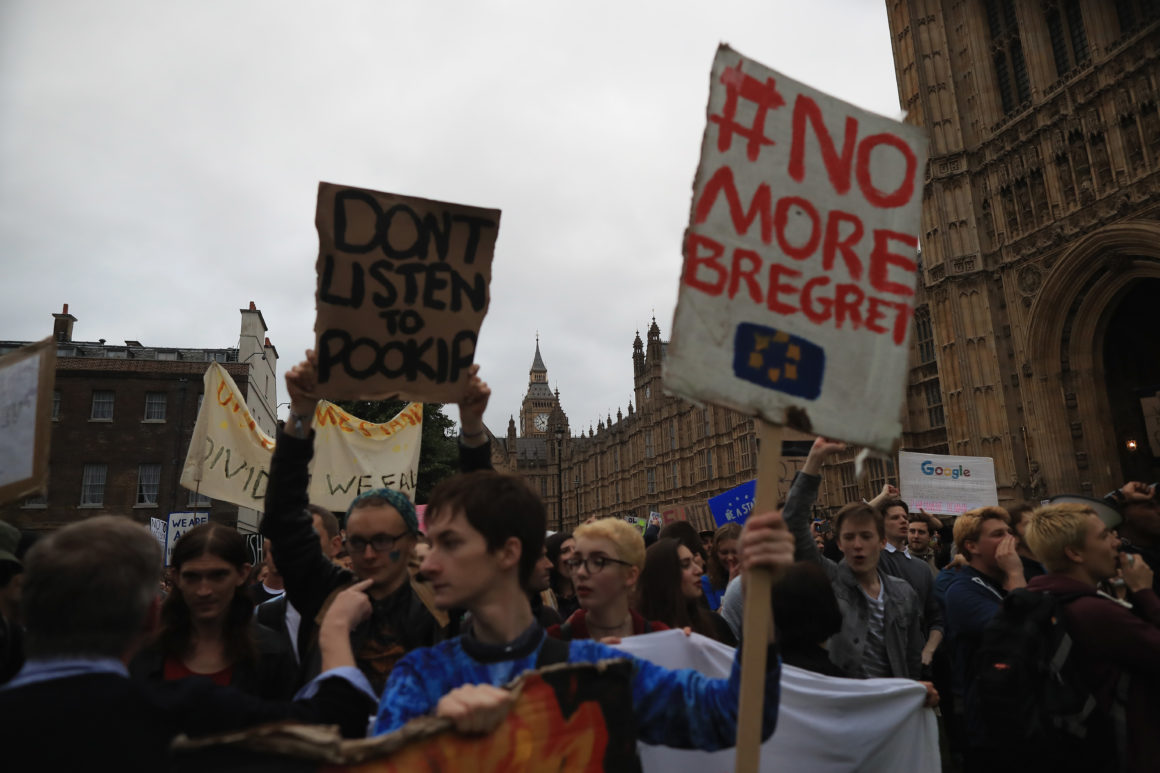
La concepción de la democracia moderna se fundamenta en que el voto es un medio y no un fin. Un medio que sirve para decidir quién gobierna, pero no cómo gobierna. La democracia liberal o representativa establece como fin de la política no tanto el derecho de voto, que también, como la limitación de los poderes del Estado y la prevalencia e inviolabilidad de los derechos de los ciudadanos. Dicho en otras palabras, los ciudadanos tienen el derecho a vivir según sus creencias, siempre que no perjudiquen a terceros, y el poder político, sea quién sea el que lo ostente, no puede forzarlos a cambiarlas.
En esta concepción de la democracia, el voto no sirve para imponer directamente algo a los demás si no para elegir a unos representantes que han de negociar con los otros, respetando los derechos de la minoría, las leyes y normas que se han de aplicar. Por el contrario, el referéndum, al limitar las opciones a sí o no, a blanco o negro, es siempre una acción de fuerza de la mayoría contra la minoría, como se ha visto en el Brexit. Una acción de fuerza no cruenta, ciertamente, pero una imposición pura y dura. Es la continuación de la violencia política con guante de seda.
Los referéndums sólo tiene sentido para ratificar o rechazar algo debatido y acordado previamente por los representantes de los ciudadanos en el Parlamento. Convocar un referéndum previo a toda negociación política en el marco legal y constitucional establecido, es algo ajeno a la democracia.
Pero hay más razones para dudar de la naturaleza democrática de los referéndums. Kristi Lowe y Kelsi Suter las exponen en POLITICO:
After Britain’s decision to leave the European Union via popular referendum last month, political turmoil ensued. But don’t let the near-collapse of the British government make you think governments will be dissuaded from using this form of supposedly direct democracy in future: Referendums are more popular than ever. In fact, Britain’s is just the latest in a recent surge in Europe, and, despite its much-fretted-over results, it seems to have set the stage for even more to come: speculation has already begun that France, Italy, the Netherlands and others may soon follow suit.Seguir leyendo...
It’s easy to see why. Referendums, which bypass elected representatives by submitting a proposed law or public measure to a direct popular vote, let citizens vent their frustrations with the powerful elites that run their governments. Today, when large groups are complaining of exclusion from politics, and when frustration with immigration, globalization, perceived disenfranchisement and elitism have fueled the rise of Donald Trump in the United States and nationalist groups across Europe, referendums are a particularly useful mechanism for politicians who want to make sure their people feel heard. Many leaders view them as a safety valve for populist anger.
But, in our experience working on referendum campaigns around the world with a major polling firm, we have learned that referendums are vulnerable to a number of serious flaws — flaws which call into question claims that referendums are a more direct form of democracy than other types of elections, and which should make governments think twice before offering them.
La izquierda, de la ilusión a la fantasía
La CUP y el Brexit
La Candidatura d'Unitat Popular fa una valoració dels resultats del referèndum del passat 23 de juny al Regne Unit on en conjunt, i malgrat resultats de signe oposat a Escòcia i a Irlanda del Nord, la majoria social ha apostat per la sortida de la Unió Europea. Aquesta valoració s'ha fet sense presses i des d'una postura crítica, observant la complexitat dels processos que s'estan donant en aquesta Europa travessada de conflictes i contradiccions.Si no les cansa el 'dejà vu' elevado a la máxima potencia, sigan leyendo...
Com a única força política dels Països Catalans amb representació institucional que treballa per una sortida d'esquerres a la Unió Europea, l'Euro i l'OTAN volem fer una aportació valorativa dins del marc català i també en el debat obert dins l'esquerra europea.
1. La Unió Europea s'ha convertit, des de fa anys, en una eina del capitalisme neoliberal per controlar i reprimir els anhels i les sobiranies dels pobles i les treballadores europees. Des de fa anys l'hegemonia francoalemanya en un inici i germànica actualment exercides des de la Troika (Comissió Europea, el Banc Central Europeu i el Fons Monetari Internacional) ha imposat a les perifèries europees les anomenades polítiques d'austeritat basades en l'imperi de la deutocràcia, això és, la subordinació de les polítiques socials a la prioritat del pagament del deute, la imposició d'unes polítiques migratòries criminals contràries absolutament al principi de lliure circulació de les persones, i una cada vegada major negació de la democràcia i la sobirania dels pobles, visibilitzada amb els diferents memoràndums i el sotmetiment del govern grec després del referèndum de l'Oxi, els quals han agreujat la situació de cara als pobles del sud.
2. Respectem i saludem la decisió de la majoria social del Regne Unit de sortir de la Unió Europea. Considerem aquesta un cop als mercats internacionals, al projecte d'Unió Europea i la recuperació de la sobirania nacional per part del Regne Unit. Alhora ens reafirmem en destacar que la plena sobirania no existeix dins d'estructures internacionals que l'encorseten i la sotmeten com la UE, el BCE o l'FMI.
3. Celebrem la valentia del govern britànic de fer particip als pobles de la Gran Bretanya de la decisió de sortir o no de la UE via referèndum. Demostra un cop més el diferent tarannà d'aquell govern en comparació amb el govern de l'Estat espanyol.
La UE supera los 510 millones de habitantes

EUROSTAT.- Au 1er janvier 2016, la population de l'Union européenne (UE) était estimée à 510,1 millions de résidents, contre 508,3 millions au 1er janvier 2015. Au cours de l'année 2015, 5,1 millions de naissances ont eu lieu dans l’UE, tandis que 5,2 millions de personnes sont décédées; ce qui signifie que l'UE a connu pour la première fois une variation naturelle négative de sa population. La variation démographique restante (positive) correspond essentiellement à l'apport du solde migratoire.Más...
Les États membres les plus peuplés de l’UE demeurent l’Allemagne (82,2 millions de résidents), la France (66,7 millions), le Royaume-Uni (65,3 millions) et l'Italie (60,7 millions). Ensemble, ils réunissent plus de la moitié de la population de l'UE.
Ces chiffres sont publiés par Eurostat, l'office statistique de l'Union européenne, quelques jours an amont de la Journée mondiale de la population (11 juillet). D’autres faits intéressants ainsi qu’une infographie sur la population de l’UE sont également disponibles sur le site web d’Eurostat.

Solo más Europa puede vencer al nacionalismo europeo [Guy Verhofstadt]
Aunque desafortunada, la decisión de los votantes británicos de abandonar la Unión Europea era esperable. Década tras década, sus políticos se han abstenido de defender la pertenencia a la UE, o al menos explicar al pueblo británico cómo funciona y por qué es necesaria.Leer el original en inglés, aquí
En todo su mandato, David Cameron no mostró liderazgo ni voluntad para comprometerse realmente con la UE. Gran Bretaña siempre tuvo un pie afuera mientras su primer ministro no dejaba de lanzar críticas a los burócratas anónimos de Bruselas. Lamentablemente, su tardío intento de defender la pertenencia a la UE durante la campaña del Brexit no bastó para revertir los efectos de décadas de mentiras sobre la opinión pública británica.
Contra los consejos de amigos y aliados, Gran Bretaña eligió aislarse del resto de Europa. Ahora que su decadencia postimperial está completa, la lección más importante que podemos extraer del referendo por el “Brexit” que selló su destino es que no se puede vencer al nacionalismo accediendo a las demandas de los nacionalistas. Si la UE quiere hacer frente a las vertientes nacionalistas que están socavando su raison d’être misma, tendrá que escuchar las inquietudes de la gente y ofrecer una visión radical nueva para una gobernanza eficaz. De lo contrario, el cáncer del nacionalismo se extenderá.
En primer lugar, los países que se quedan en la UE ahora deben sostener la legalidad europea y demandar un divorcio completo y rápido. Los ciudadanos del Reino Unido votaron por irse, y sus líderes políticos aseguran que respetarán el resultado del referendo, así que insistir en que lo hagan lo antes posible no es un “castigo”. Si la inacción británica prolonga el sufrimiento económico de Europa derivado de la incertidumbre política, hay que encarar una separación plena en forma unilateral.
En lo político, el RU ya va camino a convertirse en adversario, más que socio de confianza, de la UE. Antes de desdecirse bajo intensa presión, Theresa May (secretaria de interior y ahora principal candidata para suceder a Cameron como primera ministra) sembró dudas sobre la situación futura de los nacionales de la UE residentes en el RU, al prometer solamente que serían “parte de la negociación” para la salida de Gran Bretaña. En realidad, May se opuso al Brexit, pero su hostilidad antieuropea solo difiere en grado, no en cualidad, de la de políticos pro-Brexit como Daniel Hannan, un eurodiputado conservador, y Nigel Farage, líder del Partido de la Independencia del RU, quienes celebran la posibilidad de que haya otros referendos por el abandono en toda la UE.
Felizmente, el contagio post-Brexit todavía no se materializó, lo que muy probablemente se debe al lamentable espectáculo que está dando el RU desde el 23 de junio: un futuro económico incierto, el sector financiero (una potencia mundial) en busca de nuevos lugares donde radicarse y sus líderes políticos acuchillándose unos a otros por la espalda.
De hecho, es posible que el referendo haya alentado a los países de la UE (incluso aquellos con partidos declaradamente euroescépticos, como Dinamarca y Suecia) a cerrar filas en apoyo de la pertenencia a la UE. Una encuesta realizada en Suecia después del referendo por el Brexit halló que el 66% de los encuestados todavía aprueba la pertenencia a la UE; una encuesta similar en Dinamarca mostró un 9% de aumento del apoyo a la pertenencia. Los líderes de la UE no deben quedarse de brazos cruzados. La crisis del Brexit debe verse como una oportunidad para la Unión, ahora que las inquietudes por la globalización, el terrorismo, la inmigración y la desigualdad están a la orden del día. Una Europa dividida no pudo responder a estos desafíos; y aunque la ausencia de los británicos se notará, la UE ahora estará menos dividida.
Pero en su estado actual la UE no es capaz de una acción decisiva a gran escala. Para ofrecer una alternativa al atractivo emocional del nacionalismo populista, la Unión debe volverse más atenta a las demandas de sus ciudadanos. Esto requiere reformas estructurales profundas a la eurozona y a las instituciones políticas centrales de la UE.
Los economistas generalmente coinciden en que una moneda única no es sostenible sin unión fiscal o un organismo de hacienda en común. Si los europeos no terminan de hacer lo que empezaron al crear el euro, seguirán sufriendo el malestar económico de la desunión estructural. Completar la integración traerá prosperidad y una mejor administración.
Similares falencias se ven en los mecanismos de defensa europeos. Es absurdo que Europa tenga la internacionalmente reconocida Agencia Espacial Europea y al mismo tiempo carezca de un organismo creíble para obtener y compartir datos de inteligencia en la lucha antiterrorista. Tras los ataques del pasado noviembre en París debería haber quedado claro que el terrorismo sin fronteras demanda una inteligencia sin fronteras, pero los estados miembros de la UE siguen anteponiendo la soberanía individual a la seguridad colectiva. No basta con aumentar la cooperación intergubernamental. Europa necesita una autoridad central de inteligencia con capacidad efectiva.
Iniciar estas reformas de largo alcance es el único modo de que Europa corte el ascenso populista que condujo al triunfo de la campaña pro‑Brexit en el RU. Disiento por completo de los que dicen que hay que devolver soberanía a los estados miembros: eso sólo debilitaría más el proyecto de integración que protegió la paz y la prosperidad de Europa por décadas. El populismo y el euroescepticismo son enemigos de ese proyecto, y el único modo de vencerlos es construir una Europa funcional para sus ciudadanos. Menos que eso solamente servirá para los demagogos dispuestos a seguir al RU al desierto.
dijous, 7 de juliol del 2016
El PSOE desoye a Felipe González

FELIPE GONZÁLEZ.- Los ciudadanos podrán entender que, a estas alturas de mi vida, se haya reafirmado en mi pensamiento la prioridad de los intereses generales de España y sus ciudadanos sobre cualquier otra. Y es precisamente esto lo que me lleva a pensar que el Partido Socialista ni puede ni debe entrar en coalición con el PP. Debe ocupar su sitio en una oposición responsable. Lo cual significa al mismo tiempo exigente y dialogante. Siempre lo ha hecho en asuntos de Estado, incluso asumiendo el protagonismo de pactos concretos como la lucha contra el terrorismo. Pero también tiene que ocuparse de reconstruir su propio proyecto como alternativa al PP con vocación de mayoría.Leer el artículo completo, aquí
En esta situación, la solución de que haya una investidura para España, teniendo en cuenta que no hay mayoría alternativa coherente para hacerlo, pasa por un Gobierno del PP o encabezado por el PP.
O sea, en mi opinión, el Partido Socialista tiene que aceptar el diálogo que le ofrece el candidato del PP, aun dejando claro que no tiene intención de formar parte de una coalición con el mismo. Como ya dije hace unos meses, reitero mi opinión negativa a lo que llaman gran coalición al mismo tiempo que afirmo la responsabilidad de las fuerzas políticas: si no pueden formar Gobierno, tampoco pueden obstaculizar que este Gobierno se forme.
El resultado del 26-J coloca al Partido Socialista ante esa responsabilidad. Excluyendo la coalición y el apoyo al Partido Popular en la investidura, en caso de necesidad, no debe ser un obstáculo para que haya un Gobierno minoritario.
Subscriure's a:
Missatges (Atom)